Copyright and AI

Copyright, training data, AI output and protecting AI through intellectual property.

Protecting AI through intellectual property – how to safeguard innovation

AI technologies – from algorithms to complex learning models – have considerable economic value. It is all the more important to use intellectual property rights in a targeted way to protect investments, competitive advantages and innovations. However, not every component of an AI application can be protected in the same way. Which IP rights are

Protecting AI through intellectual property – how to safeguard innovation Read More »
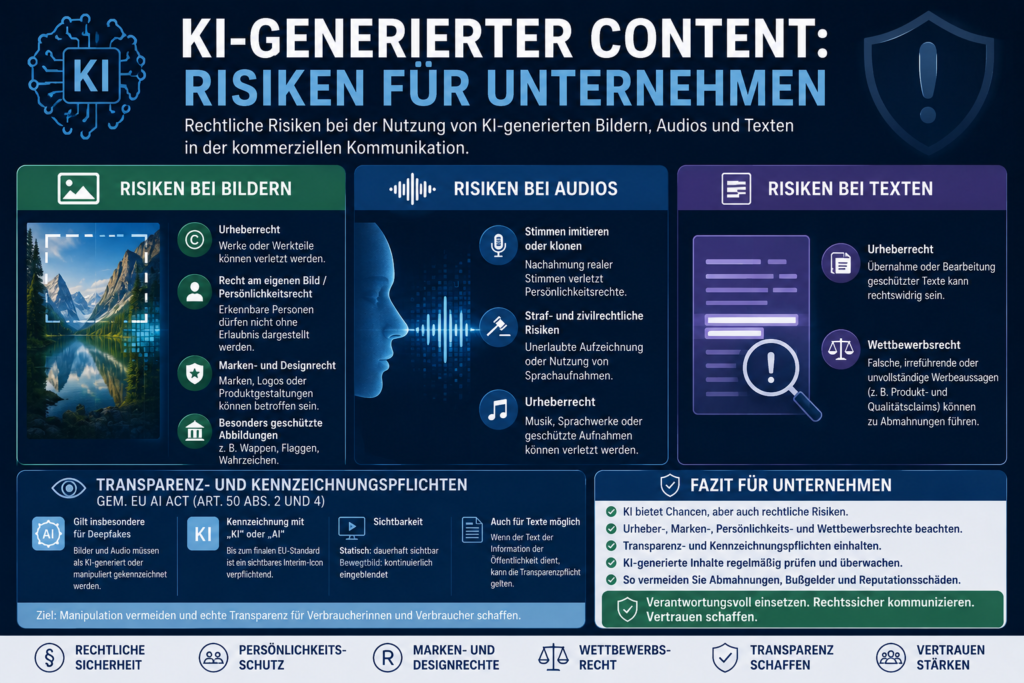
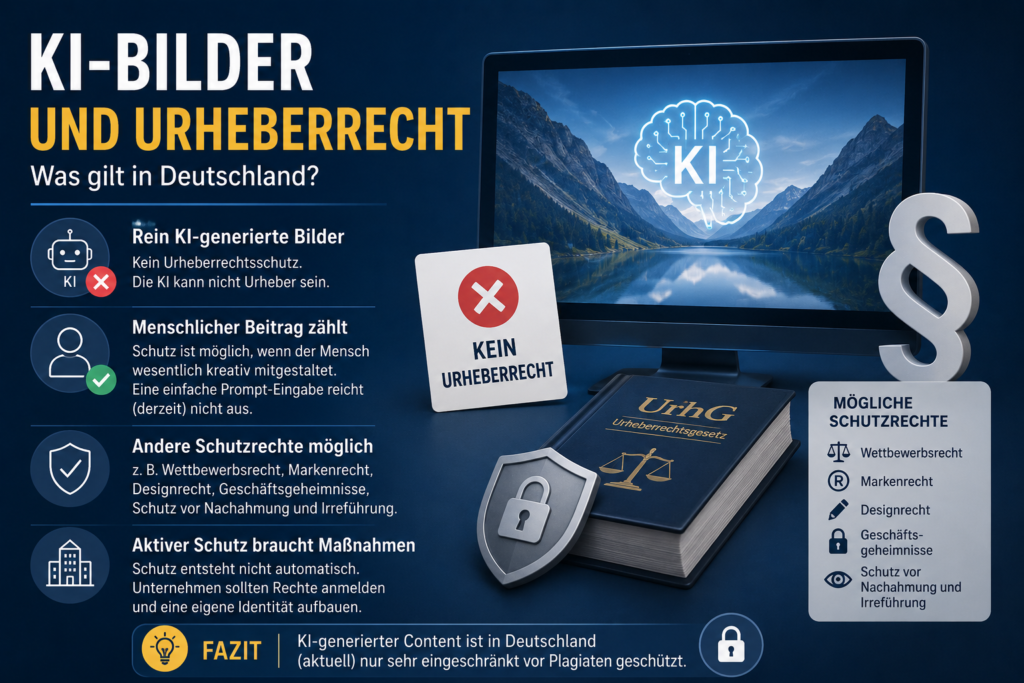
Risks of AI content in advertising and corporate communications

Companies are increasingly using AI-generated images, audio and texts in advertising and corporate communications. Depending on the type of content, different legal risks are involved. Risks of AI images For image content, the main risks lie in Risks of AI audio With audio content, there are considerable risks if voices are imitated or cloned. This

Risks of AI content in advertising and corporate communications Read More »

Judgment of the Regional Court of Hamburg 2024 (case no. 310 O 227/23) LAION – legally sound use of copyright-protected works in AI research

1. Facts The claimant, a professional photographer, had offered one of his works for licensing via the image agency Bigstock. The image was included in the open data set “LAION-5B”, published by the non-profit association LAION e.V. The data set serves AI research and contains image-text pairs used for developing and training large AI models.

Judgment of the Regional Court of Hamburg 2024 (case no. 310 O 227/23) LAION – legally sound use of copyright-protected works in AI research Read More »

How can AI systems and AI applications be protected by intellectual property?

Developing artificial intelligence (AI) often involves considerable investment for companies. To protect these investments and prevent competitors from simply copying ideas or technologies, various intellectual property (IP) rights are available – some through registration, some by operation of law. 1. Patents 2. Utility models 3. Design protection 4. Trade marks 5. Copyright 6. Know-how and

How can AI systems and AI applications be protected by intellectual property? Read More »

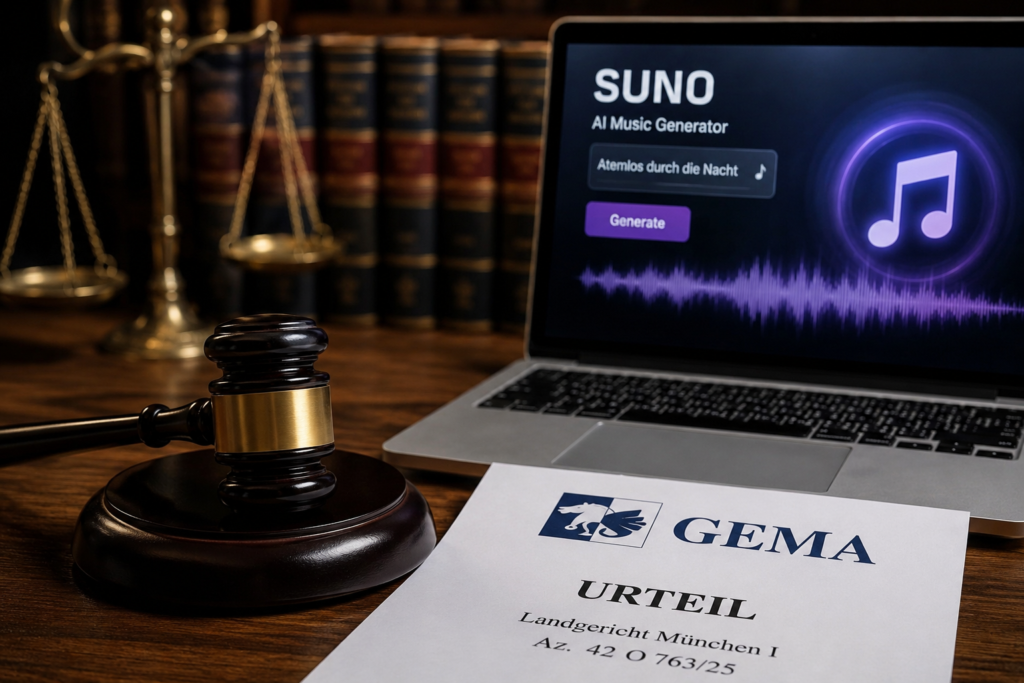
GEMA v SUNO: Regional Court of Munich I strengthens copyright against AI music generators

AI-generated music is once again the focus of the courts. In its judgment of 31 July 2026 (ref. 42 O 763/25), the Regional Court of Munich I largely found in favour of GEMA. The court ruled that the provider of the AI music generator SUNO is liable for copyright infringements. The focus is on both

GEMA v SUNO: Regional Court of Munich I strengthens copyright against AI music generators Read More »

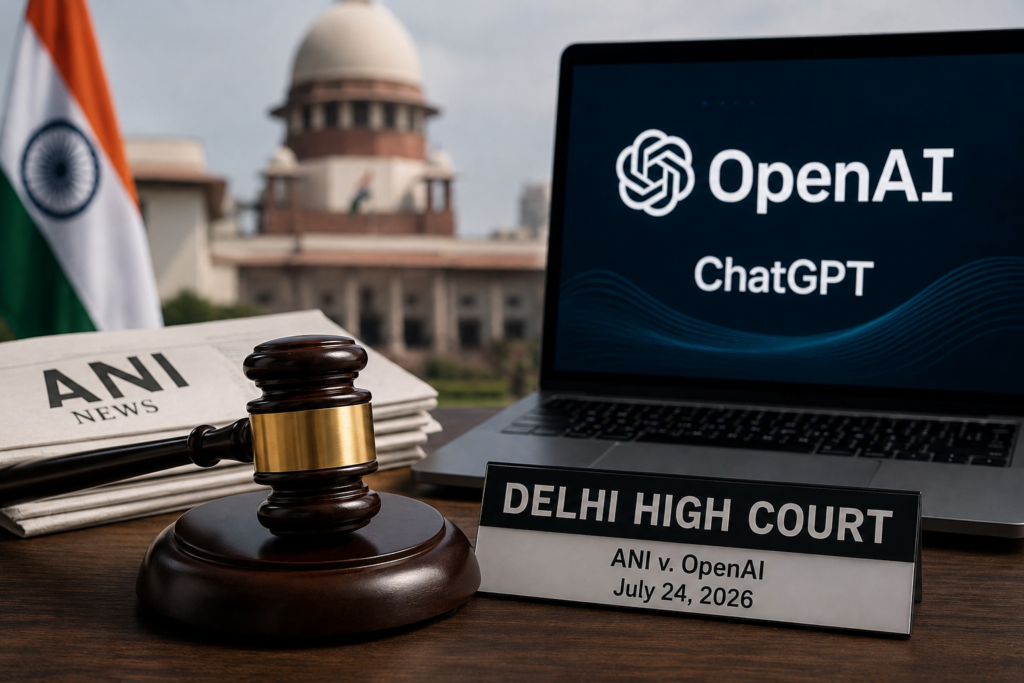
Delhi High Court: OpenAI achieves important success in copyright dispute with news agency ANI

May an artificial intelligence be trained with copyright-protected news? This question is occupying courts worldwide. In widely noted proceedings between the Indian news agency ANI and OpenAI, the Delhi High Court has set an initial course. The decision of the Delhi High Court is an important interim step in the worldwide dispute over the training

Delhi High Court: OpenAI achieves important success in copyright dispute with news agency ANI Read More »

LAION proceedings: Higher Regional Court of Hamburg confirms text and data mining for AI training datasets – Federal Court of Justice considers referral to the CJEU

The Higher Regional Court of Hamburg assessed downloading a photo for the LAION dataset as permissible text and data mining; in the appeal proceedings, the Federal Court of Justice indicated a referral to the CJEU.

LAION proceedings: Higher Regional Court of Hamburg confirms text and data mining for AI training datasets – Federal Court of Justice considers referral to the CJEU Read More »

Regional Court of Munich I: GEMA wins against OpenAI – memorisation of song lyrics infringes copyright

In its judgment of 11 November 2025 (ref. 42 O 14139/24), the Regional Court of Munich I ruled that the memorisation of song lyrics in language models and their output infringe copyright and that Section 44b Copyright Act does not cover this.

Regional Court of Munich I: GEMA wins against OpenAI – memorisation of song lyrics infringes copyright Read More »

Scroll to Top